Most people worry about EV charging on long road trips. Not because the infrastructure is not there. The US has thousands of EV charging ports across every major route. The real issue is that pulling up to a charger is not the same as stopping for petrol. Charge times vary, and rural stretches can catch you off guard if you have not planned ahead.
None of that is a problem once you know what to look for. It just needs a bit of thought before you leave. This blog aims to show you exactly how to approach it, making sure you always have a backup option on the road.
1. Understand the Three Levels of EV Charging
Not all EV charging ports are the same, and knowing the difference matters when planning stops on a long drive.
- Level 1 charging uses a standard 120V household outlet. It adds approximately 5 miles of range per hour. It is useful overnight at a hotel but not practical as a road trip stop.
- Level 2 charging uses a 240V outlet and adds between 10 to 20 miles of range per hour. You will find these at hotels, shopping centres, and some rest stops. Good for a longer meal break or an overnight stay.
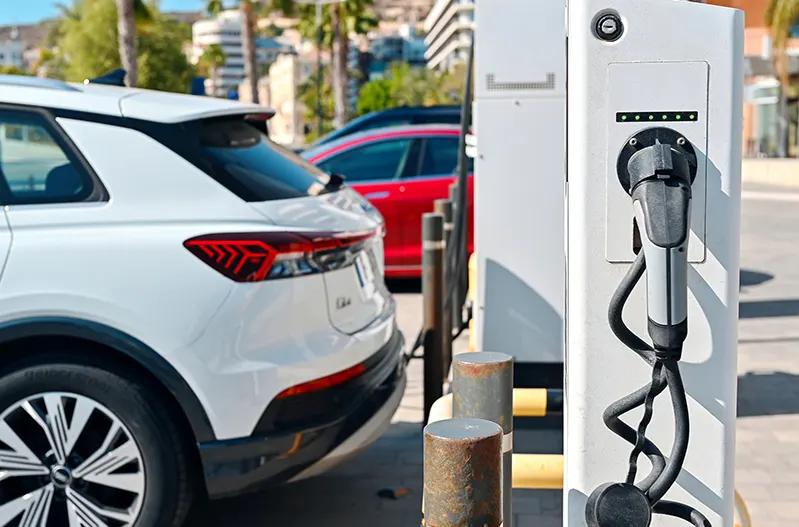
- DC Fast Charging, also called Level 3, is what long-distance drivers rely on. It can add 100 to 200 miles of range in around 30 minutes depending on your vehicle. Tesla Superchargers, Electrify America, and ChargePoint are the most widely used networks across the US.
2. Plan Your Charging Stops Before You Leave
The biggest mistake on an EV road trip is treating charging like a petrol station. You cannot always pull off at the next exit and find a fast charger. Planning your stops in advance removes that uncertainty entirely.
Use tools like PlugShare, A Better Route Planner, or your vehicle's built-in navigation to map EV charging ports along your route. Identify your primary stops and one backup for each leg. This takes 20 minutes before departure and saves hours on the road.
3. Know Your Vehicle's Real-World Range
Manufacturer range figures are tested under ideal conditions. Real-world range depends on speed, temperature, terrain, and how much climate control you use. At highway speeds of 70mph or above, expect your range to drop by 15 to 25 percent compared to the stated figure.
Cold weather reduces battery efficiency further. If you are driving in winter or through higher elevations, plan charging stops closer together. A conservative buffer of 20 percent remaining charge before each stop is a practical rule.
4. Arrive at Charging Stops with Enough Range Left
Arriving at a charger with less than 10 percent battery puts you in a difficult position if the charger is occupied or out of order. Aim to arrive with at least 15 to 20 percent remaining. This gives you flexibility to drive to an alternative if needed.
DC fast chargers charge most efficiently between 20 and 80 percent. Charging from near-empty to full takes significantly longer. Stopping more frequently for shorter charges is often faster overall than waiting for a full charge at each stop.
5. Use Charging Stops Productively
A 30-minute DC fast charge is not lost time if you plan around it. Most fast chargers are located near retail areas, restaurants, or rest stops. Use the time to eat, stretch, or handle anything you need before getting back on the road.
Some of the best EV charging port locations on long US routes are placed deliberately near amenities. Electrify America stations, for example, are frequently located in Walmart car parks, making a charging stop useful rather than just a wait.
6. Have a Backup Plan for Rural Routes
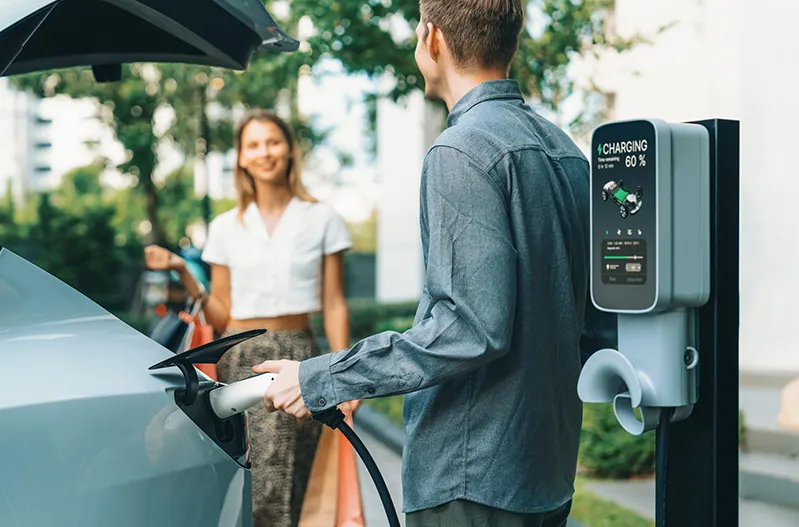
Urban and interstate routes in the US are well covered by fast charging networks. Rural routes are different. If your trip takes you through remote areas, research the gaps in coverage in advance and carry a portable Level 2 charging cable as a precaution.
Some hotels along rural routes offer Level 2 charging. Calling ahead to confirm availability adds a reliable overnight option to your planning.
Renting an EV for Your Road Trip
The charging network across the US is extensive, the tools to plan your route are mostly free, and the stops themselves do not have to feel like interruptions. A 30-minute fast charge at a well-placed stop is not lost time, rather, you get a chance to check the next leg of the route.
If you are ready to take your first long EV road trip and want a reliable, well-maintained electric vehicle to do it in, Hertz has a range of EVs available for rental across the US. Every vehicle comes fully charged and ready to go. Browse available electric vehicles and plan your trip with Hertz today.