Mallorca rewards a slower kind of exploring. The best version of the island is strung along a single road that climbs through mountains, drops into stone villages, and finally opens out onto the north coast.
This route covers the essentials: the Serra de Tramuntana, the villages tucked into it, and the coastline beyond. If you're looking for a Mallorca road trip itinerary that captures the island properly rather than skimming the surface, this is it.
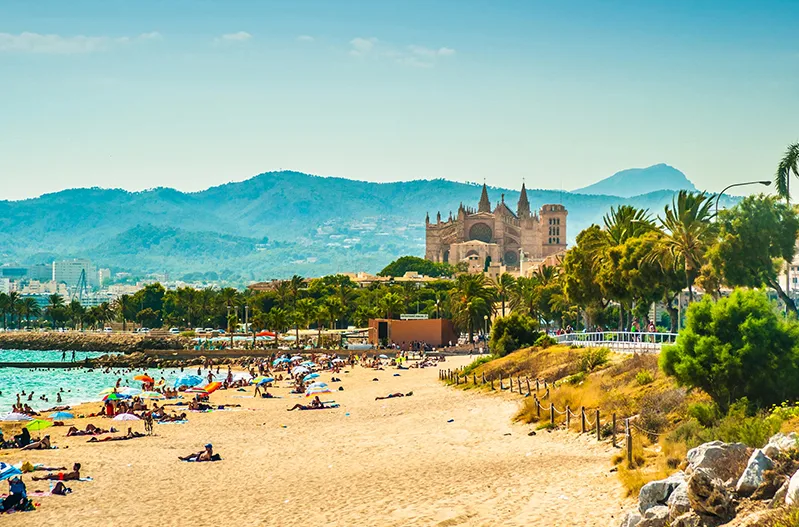
Starting Point: Palma
Begin in Palma and head northwest. The road out of the city is straightforward, and within twenty minutes the landscape changes completely. Flat coastal plains give way to the first ridges of the Tramuntana mountains.
Leave in the morning if you can. Light on the mountains is softer earlier in the day, and the villages ahead get busy by midday.
Valldemossa
Valldemossa is usually the first proper stop, and it sets the tone for the whole route. Narrow stone streets, terracotta rooftops, and views that stretch down toward the coast make it worth slowing down for.
Park just outside the old town rather than trying to find space within it. A short walk in is part of the experience.
Give yourself an hour here. Longer if you want to sit somewhere quiet with a coffee and take in the pace of the place.
Deià
The road from Valldemossa to Deià is one of the most scenic stretches on any Serra de Tramuntana road trip. Tight bends hug the mountainside, with the sea appearing and disappearing between olive groves.
Deià itself sits on a hillside, and its narrow lanes are best explored on foot once you've parked. The village has long attracted writers and artists, and it's easy to see why once you're standing in it.
If you have time, the short walk down to Cala Deià is worth the effort. The cove is small, quiet, and framed by cliffs on either side.
Sóller
From Deià, the road continues toward Sóller, passing through some of the most dramatic mountain scenery on the island. Sóller sits in a wide valley surrounded by citrus groves, and it feels distinctly different from the tighter, steeper villages before it.
Spend some time in the town square, then head up to the Port de Sóller if the weather is good. The bay here is calm and well suited to an afternoon by the water.
If you'd rather slow down further, the vintage tram connecting Sóller town to the port runs along the coast and makes for a pleasant break from driving, even on a car-based trip.
Driving through the Tramuntana tunnel is the quickest way through, though the old mountain pass over the Coll de Sóller is worth taking at least once for the views alone.
North Toward Alcúdia
The character of the drive shifts again once you leave Sóller and head north. Mountains give way to gentler countryside, and the road opens up considerably, making for easier, faster driving.
Alcúdia makes a natural stop here. The old town is walled and well preserved, with a relaxed pace that suits an early evening walk. Narrow streets lead past small shops and restaurants, and the town rarely feels overwhelmed even in peak season.
The beaches nearby are long, sandy, and a good contrast to the rocky coves further south. Alcúdia Bay in particular offers calm, shallow water that suits families and slower swimmers well.
Cap de Formentor
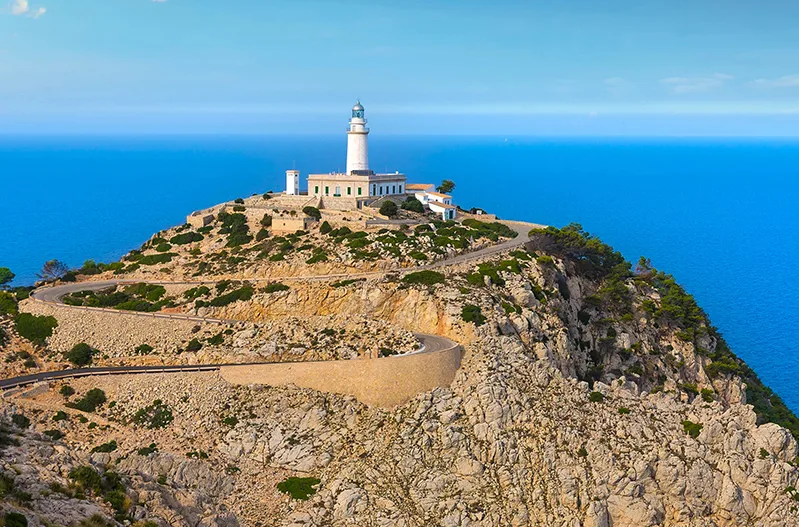
No road trip through northern Mallorca is complete without the drive out to Cap de Formentor, widely considered one of the best Mallorca scenic drives on the island. The road is narrow, winding, and cut directly into the cliffside, with viewpoints along the way that look out over turquoise water far below.
Mirador Es Colomer is the standout stop, and arriving early in the day helps avoid the crowds that build up by late morning.
The lighthouse at the end of the peninsula marks a fitting finish to the route, with the Mediterranean stretching out in every direction.
Planning the Drive
This route works comfortably over two or three days, with time to stop properly in each village rather than rushing between them. Mountain roads are narrow in places, so a relaxed pace matters more than covering distance quickly.
Fuel stops are limited once you're deep in the Tramuntana, so filling up before Valldemossa is a sensible habit. Parking fills up quickly in the more popular villages during peak season, so arriving early gives you more options and a calmer walk around once you're there.
Weekday mornings tend to be quieter than weekends throughout the route, particularly in Valldemossa and Deià, which see a steady flow of day-trippers from Palma once the sun is properly up.
Getting the Right Start With Hertz
A route like this depends on having a car you're comfortable with for several days of mountain roads and coastal stretches. Picking one up in Palma with Hertz means you can start the drive straight from the airport, with vehicles suited to a compact couple's trip or a larger family exploring the north coast together.